
Refinished White Kitchen Cabinets: A Survival Guide for the Messy Cook
Why Refinished White Kitchen Cabinets Remain the Gold Standard in 2026
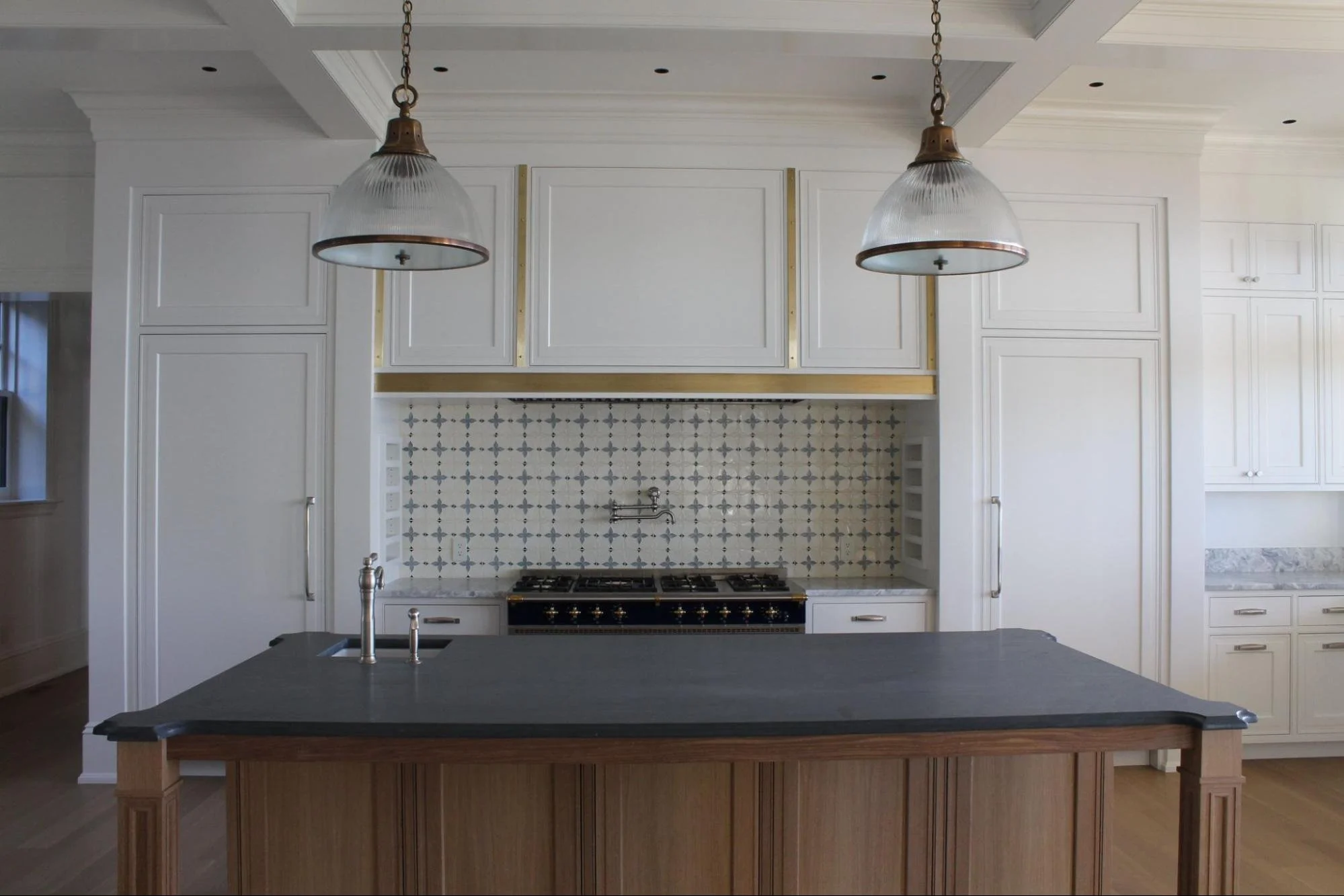
Even as design trends shift toward moody greens or natural wood tones, refinished white kitchen cabinets remain the undisputed champion of the American kitchen. Why? Because white isn't just a color; it’s a tool for architectural transformation.
White cabinets reflect light better than any other finish, instantly making a cramped North Shore galley kitchen feel like an open, airy chef’s space. They serve as a neutral canvas, allowing homeowners to swap out rugs, towels, and decor without ever needing to worry about a color clash. If you are looking to brighten a space that lacks natural light, Painting Cabinets White is the most effective solution available.
The Psychology of a Bright Kitchen
Did you know there are over 900 shades of white? Choosing the right one is what separates a "hospital-grade" sterile look from a warm, inviting home. For a soft, approachable feel, many homeowners in the Greater Boston area opt for Sherwin Williams Alabaster or Benjamin Moore White Dove. These shades have subtle warm undertones that prevent the kitchen from feeling cold. On the other hand, cooler whites with gray undertones provide a crisp, modern aesthetic that pairs beautifully with stainless steel. Our Cabinet Painting experts often recommend testing these whites against your specific lighting, as New England’s natural light changes dramatically between the bright summer and the gray winters.
Resale Value and Market Demand
From a financial perspective, white is the safest bet you can make. Statistics show that homeowners can expect to recoup 50–81% of the cost of a full-scale kitchen renovation. However, full replacements are often ROI-negative. By choosing to refinish instead, you move into positive territory. White is hands-down the best color for resale value because it appeals to the widest range of buyers. When a potential buyer walks into a kitchen with refinished white kitchen cabinets, they see a modern, clean, and "move-in ready" space. This is a primary reason Why You Should Consider Cabinet Painting Services Instead of Replacement when preparing a home for the market in towns like Lexington or Concord.
The Durability Myth: Can White Cabinets Survive a Real Kitchen?
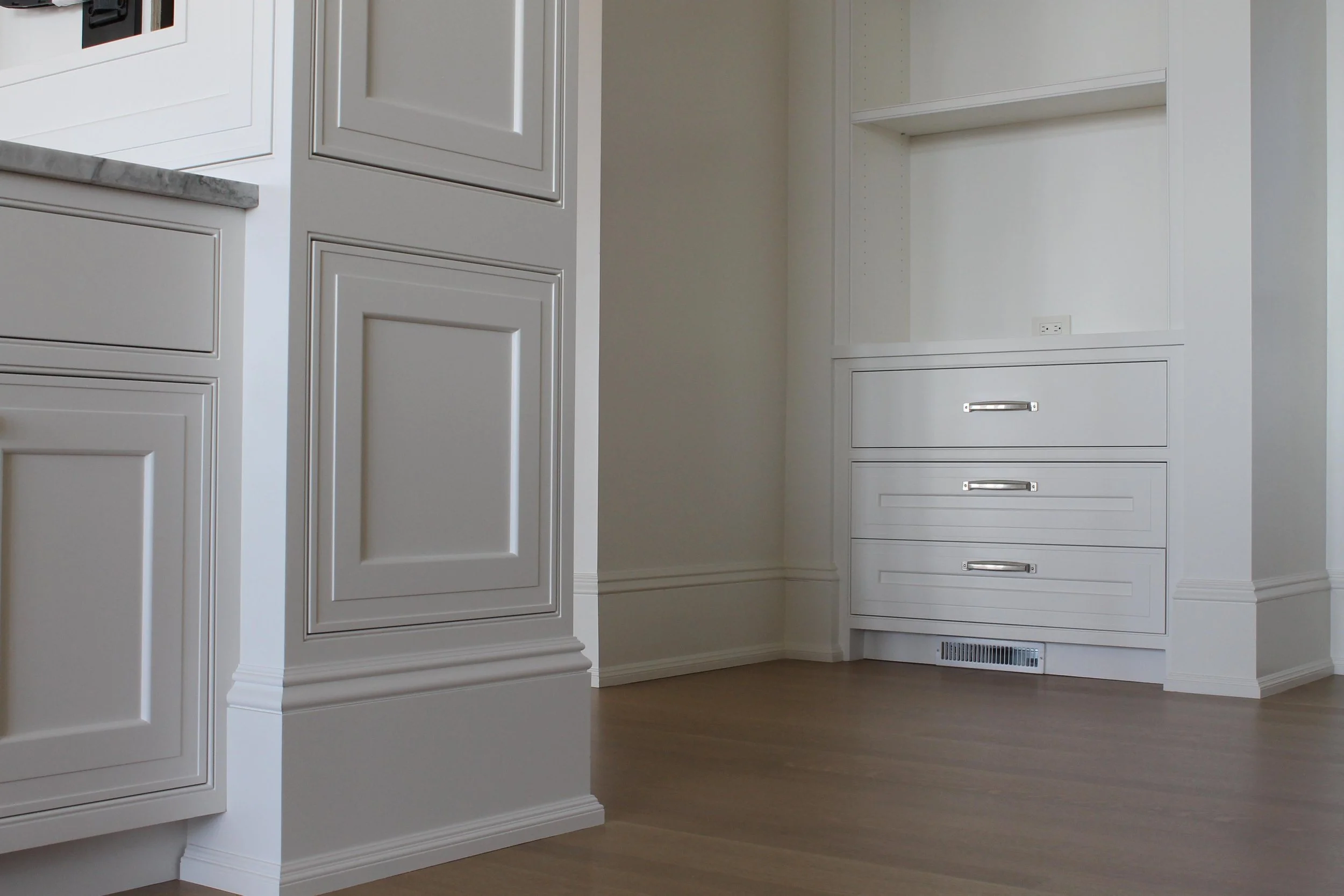
The most common fear we hear is: "Won't they show every speck of dirt?"
Think of it like the "black car logic." If you've ever owned a black car during a New England winter, you know it shows salt and road grime much faster than a white or silver car. The same applies to kitchens. Most common kitchen splatters—like salt, flour, or dried grease—actually dry to a light color. On dark espresso or navy cabinets, these spots stand out like a sore thumb. On white cabinets, they are often less visible until you’re close enough to clean them. Understanding the difference between Cabinet Painting vs Cabinet Refinishing Whats Best for Your Home is key to ensuring you get a surface that is actually cleanable.
Maintenance for the Messy Cook
For the cook who isn't afraid to use a blender without the lid, maintenance is simpler than you think. You don't need harsh chemicals. In fact, we recommend avoiding them. A simple solution of diluted dish soap and a microfiber cloth is all you need to keep refinished white kitchen cabinets looking new.
The secret to longevity is the "cure time." While the paint may feel dry to the touch within hours, it takes approximately 30 days to reach its full chemical hardness. During this first month, you should treat your cabinets with "white gloves"—avoid heavy scrubbing or letting moisture sit on the edges. When comparing Professional Cabinet Painting vs DIY, the professional advantage often lies in the industrial-grade products that offer superior moisture resistance and a faster path to a durable cure.
Preventing Yellowing and Chipping
In the past, white paint was notorious for yellowing over time, especially in kitchens with high heat or sunlight. This was largely due to oil-based formulas. Modern professionals now use hybrid alkyd-enamels or 2K catalyzed coatings. These products offer the leveling and hardness of oil paint but are water-based, meaning they won't yellow and have very low VOCs. High-quality Custom Cabinetry finishes also focus on substrate adhesion—ensuring the paint actually bonds to the wood so it doesn't chip when bumped by a vacuum or a heavy pot.
The Professional Process for Refinishing Kitchen Cabinets to White
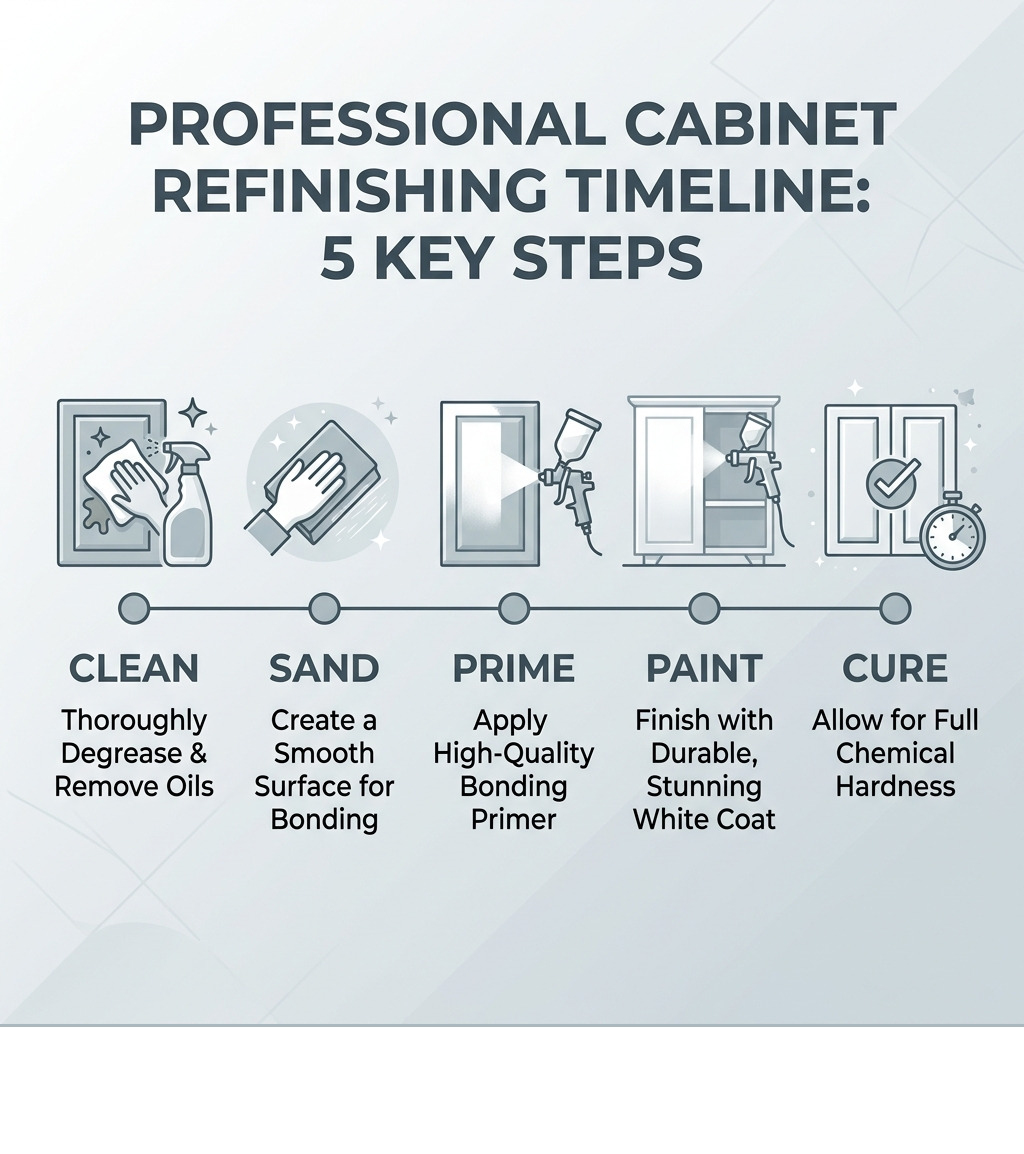
A flawless white finish isn't achieved by just picking up a brush. It’s a meticulous 5-step process. Understanding the Process What to Expect When Hiring Professional Cabinet Painting Services helps homeowners realize why this is a multi-day investment.
- Degreasing & Cleaning: We use Tri-Sodium Phosphate (TSP) or specialized deglossers to strip away years of cooking oils.
- Disassembly & Labeling: Every door and drawer is removed and labeled so the hardware aligns perfectly upon reinstallation.
- Scuff Sanding: This isn't about removing the wood; it’s about creating "teeth" in the surface so the new primer has something to grip.
- Bonding Primer: We apply high-build, stain-blocking primers that prevent wood tannins (especially in oak or cherry) from bleeding through and turning your white cabinets pink or yellow.
- The Topcoat: Multiple thin layers of cabinet-grade enamel are applied for a smooth, hard finish.
Achieving a Flawless Finish on Refinished White Kitchen Cabinets
To get that "factory finish" that looks like it came straight from a high-end showroom, we use HVLP (High Volume Low Pressure) sprayers. While a brush or roller can work for a rustic look, a sprayer eliminates brush marks and drips. We typically recommend a satin or semi-gloss sheen. Satin is the "sweet spot"—it has enough glow to reflect light and is easy to wipe down, but it doesn't highlight every minor imperfection in the wood like a high-gloss finish would. You can check our Cabinet Painting Refinishing Schedule Estimate to see how we fit this process into a standard work week.
Handling Oak and Deep Wood Grains
If you have 1990s-era honey oak cabinets, you know the struggle: the deep, porous grain. If you just paint over oak, the "pitting" of the wood grain will still show through. For homeowners who want a completely smooth, modern look, we use grain fillers like Aquacoat. This process involves "buttering" the wood to fill the pores before sanding and priming. This extra step transforms the texture of the wood, making it indistinguishable from smooth maple or MDF once the white paint is applied.
Design Strategies for Refinished White Kitchen Cabinets
White doesn't have to mean "plain." Some of the most stunning transformations we’ve done in the Greater Boston area involve using white as a base for a more complex design. A major trend for 2026 is the two-tone kitchen. By keeping the upper cabinets white, you maintain that bright, open feeling at eye level. For the lower cabinets or the island, you can introduce a "grounding" color like a deep navy, a rich forest green, or even a dark Sarsaparilla hardwood finish. This is Why Cabinet Painting is the Best Way to Update Your Kitchen on a Budget; you get a custom-designer look without the custom-designer price tag.
Styling Your Refinished White Kitchen Cabinets with Hardware and Contrast
Hardware is the "jewelry" of your kitchen. If you are refinishing your cabinets white, consider these pairings:
- Matte Black: Provides a sharp, modern contrast that looks incredibly clean.
- Brushed Brass/Gold: Adds warmth and a touch of luxury to a white kitchen.
- Polished Nickel: Offers a classic, timeless look that bridges the gap between traditional and modern.
Don't forget the "bones" of the room. Adding crown molding to the top of your cabinets before painting can bridge the gap to the ceiling, creating a high-end, built-in look that adds thousands to the perceived value of the home.
Lighting and Backsplash Coordination
White cabinets are highly reactive to their surroundings. If you have a taupe subway tile backsplash, your white cabinets will lean warmer. If you have a marble backsplash with gray veining, the cabinets will look crisper. We also recommend installing under-cabinet LED lighting. Because white reflects so much light, these LEDs will illuminate your workspace far more effectively than they would with dark wood cabinets, making your kitchen more functional for those late-night prep sessions.
Cost Realities: Professional Investment vs. DIY Risks
When evaluating the cost of refinished white kitchen cabinets, it’s important to look at the "total cost of ownership." A DIY project might seem cheaper on paper, but when you factor in the cost of high-grade spray equipment, the 40+ hours of labor, and the risk of a finish that peels in two years, the math changes.
For a detailed breakdown of how we stack up against a home-center kit, see our guide on Professional Cabinet Painting vs DIY.
Why Homeowners in Greater Boston Choose Professional Refinishing
In the North Shore and Greater Boston area, we deal with unique climate challenges. Our high humidity in the summer and dry, forced-air heat in the winter cause wood to expand and contract. This "movement" can cause cheap DIY paint to crack at the joints of the cabinet doors. Professional refinishers use flexible, high-solid coatings designed to move with the wood. Furthermore, professional shops have controlled environments to ensure that dust and pet hair don't end up embedded in your new white finish. When you choose Cabinet Painting with a local expert, you’re paying for a finish that is built to survive the New England climate.
Frequently Asked Questions about White Cabinets
Do white painted cabinets yellow over time?
Historically, yes, if they were oil-based. However, Big Dog Painting uses modern hybrid and water-borne alkyd enamels that are non-yellowing. Your "Alabaster" will stay "Alabaster" for years to come.
How long does it take for the paint to fully cure?
While you can usually start using your kitchen gently within 48 hours of reinstallation, it takes a full 30 days for the paint to reach its maximum hardness. We recommend avoiding any heavy cleaning or "scrubbing" during this window.
Are white cabinets harder to keep clean than wood?
They aren't harder to clean, but they are more "honest." They will show you where the grease is building up, which actually leads to a more hygienic kitchen. Because the finish is so smooth and non-porous, a quick wipe with a damp cloth is usually all it takes to remove a smudge.
Conclusion
Refinished white kitchen cabinets are more than just a trend; they are a strategic investment in your home’s beauty and value. Whether you are a "messy cook" who loves a busy kitchen or a homeowner looking to maximize resale value in the North Shore or Greater Boston area, white cabinets offer a durability and timelessness that no other finish can match.
At Big Dog Painting, we pride ourselves on delivering a factory-grade finish that stands up to the rigors of daily life. We understand the local climate, the best materials for New England homes, and the meticulous prep work required for a long-lasting result. If you’re ready to transform your kitchen from dark and dated to bright and modern, contact us today for a Cabinet Painting consultation. Let us help you fall in love with your kitchen all over again.